Prevalence of Human Papillomavirus in Head and Neck Cancers in South Korea: A Targeted Literature Review

Article information

Korean J Otorhinolaryngol-Head Neck Surg. 2026;.kjorl-hns.2025.00276
Publication date (electronic) : 2026 February 10
doi : https://doi.org/10.3342/kjorl-hns.2025.00276
1Massachusetts College of Pharmacy and Health Sciences, Boston, MA, USA
2Merck & Co., Inc., Rahway, NJ, USA
3MSD Korea, Seoul, Korea
4MSD Taiwan, Taipei, Taiwan
5MSD Thailand, Bangkok, Thailand
6Department of Otorhinolaryngology-Head and Neck Surgery, College of Medicine, Chung-Ang University, Seoul, Korea
Address for correspondence Wei (Vivian) Wang, PhD Merck & Co., Inc., Value and Implementation-Outcome Research, 126 E. Lincoln Ave., Rahway, NJ 07065, USA Tel +1 (732) 540-5366 E-mail wei.wang40@merck.com
Received 2025 May 29; Revised 2025 October 24; Accepted 2025 October 30.

Trans Abstract

This study assessed the human papillomavirus (HPV) prevalence and genotypes in head and neck cancers in South Korea. We performed a targeted literature review of studies published between March 2002 and January 2023 reporting on HPV genotypes in head and neck squamous cell carcinomas (HNSCCs), including oral cavity, oropharynx, larynx (glottis), hypopharynx, tonsil, tongue, gum, posterior wall, and sinonasal tract in South Korea. Nineteen eligible studies were identified. The mean prevalence of any HPV genotype was 56.5% (range, 14.5%-75.1%) for oropharyngeal cancer and 7.5% (range, 3.0%-13.8%) for oral cavity cancer. The mean prevalence of any HPV genotype was higher in male (37.9%) than female (24.1%) cases. HPV-16 was the most common genotype detected in HPV-positive cancers, with a prevalence of 75.6% (range, 29.0%-100%) in oropharyngeal cancer, 74.1% (range, 29.0%-100%) in tonsil cancers, and 29.5% (range, 0.9%-84.6%) in tongue cancers. HPV-18 was detected in 9.0% (range, 0.0%-29.0%) of HPV-positive oropharyngeal cancers and 11.8% (range, 0.0%- 72.7%) of HPV-positive oral cavity cancers. In South Korea, HPV infection is an important factor in the development of HNSCCs, particularly oropharyngeal cancers, where HPV-16 was the predominant genotype. The high prevalence of HPV-16 in cancers of the oropharynx, tonsils, and tongue underscores its strong association with these malignancies. Additionally, HPV- 18, HPV-33, and other high-risk genotypes contribute to a smaller proportion of cases. These findings highlight the potential impact of HPV vaccination in reducing the burden of HPV-associated head and neck cancers in South Korea.

Introduction

Head and neck squamous cell carcinoma (HNSCC) includes lip-oral cavity cancer, laryngeal cancer, nasopharyngeal cancer, and other pharyngeal cancers. Worldwide, an estimated 19.96 million new cases of cancer were recorded in 2022, with 2.0% being lip-oral cavity cancer, 0.9% laryngeal cancer, and 0.6% nasopharyngeal cancer [1]. In the same year, there were 9.7 million cancer-related deaths globally, with 1.9% attributable to lip-oral cancer, 1.1% to laryngeal cancer, and 0.8% to nasopharyngeal cancer [1]. The incidence of HNSCCs is rising in multiple countries, including some countries in Asia [2]. In South Korea, HNSCCs constitute a substantial health burden and accounted for over 7000 new cancer diagnoses and over 3000 deaths in 2021 [3]. Recent studies indicate that human papillomavirus (HPV) is an important cause of HNSCCs globally, causing approximately 20%-70% of cancers of the oropharynx and about 7.4% and 5.7% of cancers of the oral cavity and larynx, respectively [4-8]. The proportion of HNSCCs due to HPV, though varying widely by location, is highest in more developed countries, including South Korea [5].

Oral HPV infection is now recognized as a key driver of global increases in cancers of the oropharynx, which are most pronounced among males in North America, Europe, and parts of Asia [9]. In South Korea, the incidence of cancer of the oropharynx has increased by over 2% annually since 2000, with the sharpest rise observed in males [10]. Furthermore, from 2008 to 2020, HPV infection accounted for a growing proportion of cancers of the oropharynx in South Korea [11], a trend similar to those observed in the United States and France [12,13]. This rising trend may place a substantial financial burden on South Korea’s healthcare system, in which the median treatment cost for cancer of the oropharynx was over $20000 (USD) in 2016 [14].

HPV vaccination, especially before sexual debut, may help prevent HPV-related cancers. Currently, 3 HPV vaccines are available in South Korea: a 2-valent vaccine (Cervarix™, GlaxoSmithKline), a 4-valent vaccine (Gardasil®, Merck & Co., Inc.), and a 9-valent vaccine (Gardasil®9, Merck & Co., Inc.) [15]. HPV vaccination in 12-year-old girls was introduced in South Korea’s National Immunization Program in 2016 [14,15]. However, routine HPV vaccination is not currently provided for boys [16,17]. Globally, greater consideration is being given to gender-neutral HPV vaccination, which has already been implemented in 33 of 38 member countries of the Organisation for Economic Co-operation and Development [16,18].

To help inform HPV vaccination policy, consolidated evidence regarding HPV-associated HNSCCs is essential but scarce for South Korea. Notably, current estimates regarding HPV-positivity in oral cavity cancers are based on a few case series, primarily from Europe and North America [5]. Moreover, to our knowledge, HPV positivity in HNSCCs in South Korea has been evaluated in only a few systematic reviews that included only some of the available studies in this area. To address this knowledge gap, the current study used data from HPV genotyping analyses in South Korean patients to comprehensively evaluate the prevalence and genotype distribution of HPV in HNSCCs by anatomical site.

Methods

A targeted review of the literature was conducted to identify studies published from March 2002 through January 2023 that reported prevalences of HPV genotypes among patients with HNSCCs in South Korea. This review was conducted in accordance with the Preferred Reporting Items for Systematic Reviews and Meta-Analyses 2020 reporting guidelines [19].

Search strategy

In June 2023 we conducted systematic searches in PubMed, Embase, and the Google Scholar database. Key search terms included “human papillomavirus,” “HPV,” “head and neck neoplasms,” “head and neck carcinoma,” “oropharynx,” “oropharyngeal,” “oral cavity,” “tonsil,” “tonsillar,” “tongue,” “hypopharyngeal,” “hypopharynx,” “nasal,” and “nasopharyngeal.” The search was limited to studies with the terms “Korea,” “South Korea,” “Seoul,” or “Republic of Korea.” A complete list of search terms and limits is provided in Supplementary Table 1.

Study inclusion and exclusion criteria

Studies included in this review were selected based on predefined criteria, as described in Table 1. Specifically, this review included original studies, systematic reviews, or meta-analyses reporting on the prevalence of HPV in adolescents and adults aged 13 years or older, with histologically confirmed invasive HNSCC. Outcomes of interest included the prevalence of high-risk (HR) HPV genotypes (16, 18, 31, 33, 35, 39, 45, 51, 52, 56, 58, and 59) and low-risk (LR) HPV genotypes [20]. Studies varied regarding the number of genotypes included in laboratory assays as well as genotype-based definitions of HR and LR HPV. Systematic reviews and meta-analyses were retrieved, and their reference lists were screened for potentially relevant articles. Studies reporting only on HPV prevalence in healthy populations or individuals with carcinoma in situ or malignancies in other anatomic sites were excluded.
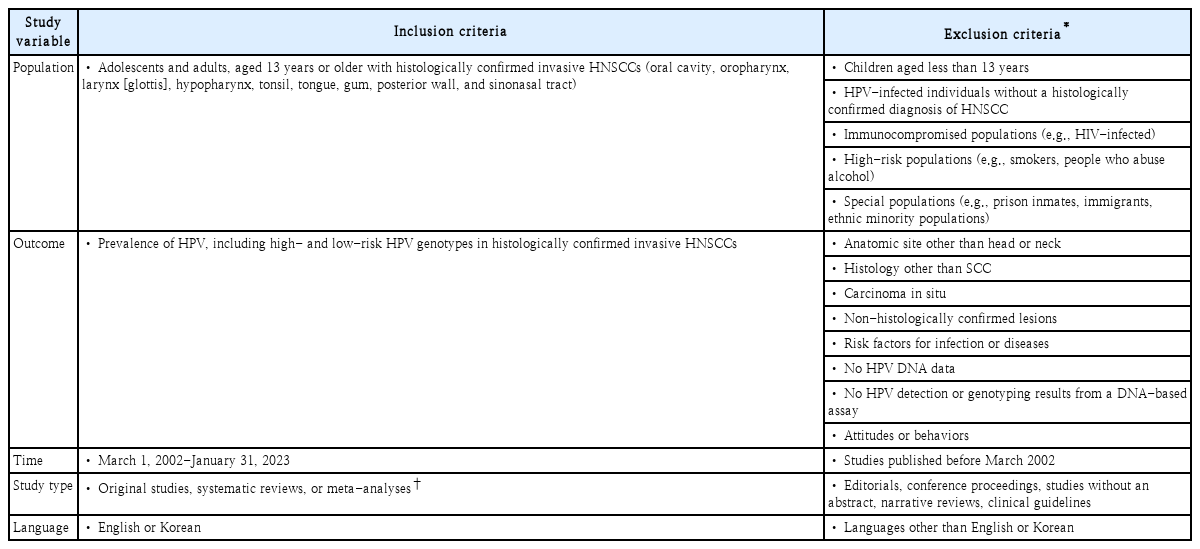
Study selection criteria

Study selection

To identify potentially relevant studies, a single reviewer (AFSM) conducted an initial screen of titles and abstracts. Studies undergoing the initial screen were retained for full-text review if they fit or could not be excluded from fitting the inclusion and exclusion criteria based on the information in the title and abstract. Full-text versions of studies passing the initial screen were then evaluated by a single reviewer (AFSM), who conducted a detailed assessment to determine whether the study fit the inclusion and exclusion criteria. Reasons for exclusion were documented.

Data extraction and synthesis

Using a preset template, information on key parameters was extracted from eligible studies and entered into a Microsoft Excel workbook (Microsoft Version 16.86). Parameters included study characteristics (study name, first author, publication date, and study design), patient characteristics (overall sample size, the number of study subjects with HNSCC, HPV-positive HNSCC, HR HPV-positive HNSCC, LR HPV-positive HNSCC, and cancer type [see Supplementary Table 2 for cancer type classifications]) method of tissue collection, method of HPV DNA detection, and type of HPV genotyping test. The following outcomes were extracted: overall HPV prevalence in HNSCC tumors, the distribution of HR and LR genotypes in HPV-positive HNSCC tumors, the age distribution of patients with HPV-positive HNSCC tumors, and the sex distribution of patients with HPV-positive HNSCC tumors.

Descriptive statistics, including frequency distributions and percentages, were used to analyze the prevalence of any HPV and HR genotypes by anatomical site, age, and sex. The pooled sample size and prevalence range for any HPV, HR HPV, and HPV genotypes were reported by HNSCC subtype. Weighted mean prevalence values were calculated using weights based on the study sample size. Data were systematically tabulated and visualized using bar charts.

Results

Summary of study characteristics

In total, 183 potentially eligible studies were identified, including 33 from PubMed, 36 from Embase, and 114 from Google Scholar (Fig. 1). After removing 17 duplicate records, 166 studies underwent screening of the title and abstract, of which 129 were excluded for not fitting the inclusion criteria. Thus, 37 studies underwent a full-text review, among which 18 were excluded for the following reasons: wrong outcome (n=7), wrong study population (n=7), and wrong study type (n=4).
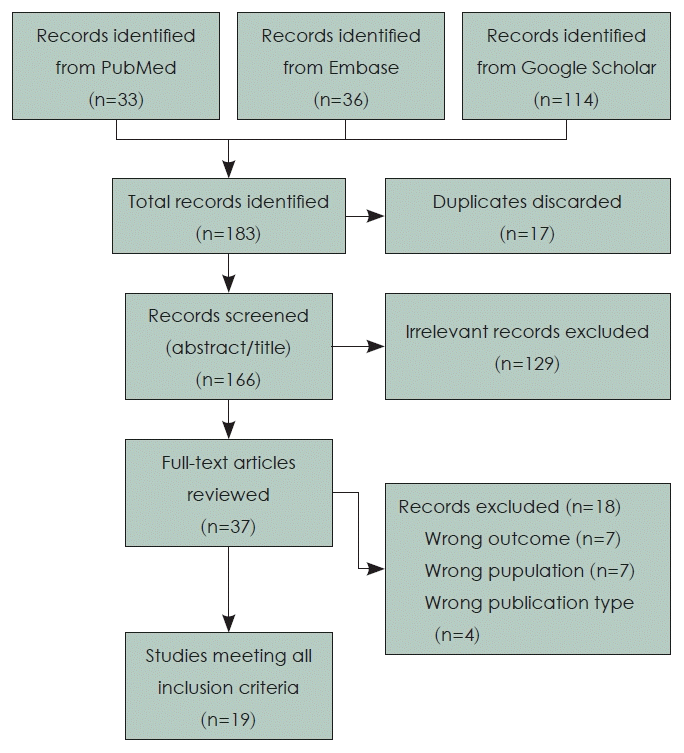
Fig. 1.

Flow diagram of study selection.

In total, 19 studies met all inclusion and exclusion criteria (Table 2); all but 1 study [21] were retrospective analyses. HNSCC evaluated in the studies included cancers of the oropharynx [11,21-25], oral cavity [11,25-28], tongue [11,15,21,27,29,30], tonsil [11,21,22,25,30-36], and glottis [28,37] (Table 3). Some studies evaluated multiple subtypes of HNSCC.11,25,30) The total pooled sample size of cancer cases evaluated was 3002, including 885 cancers of the tonsil from 11 studies, 665 cancers of the oropharynx from 6 studies, 600 oral cavity cancers from 5 studies, and 266 tongue cancers from 6 studies. In total, 12 studies [11,21-24,27,28,32-34,36,37] reported HPV prevalence by sex or provided data regarding the age of HPV-positive cases, using various age parameters and cut-off values (Table 4). Two [22,27] of these 12 studies also reported the prevalence of HR HPV by sex (footnote *) (Table 4) and 3 [22,28,34] reported prevalences of HPV-16 and HPV-18 by sex. An additional study reported the mean age of patients with HR HPV-positive cancer of the glottis but did not provide estimates of HPV prevalence by sex [37].
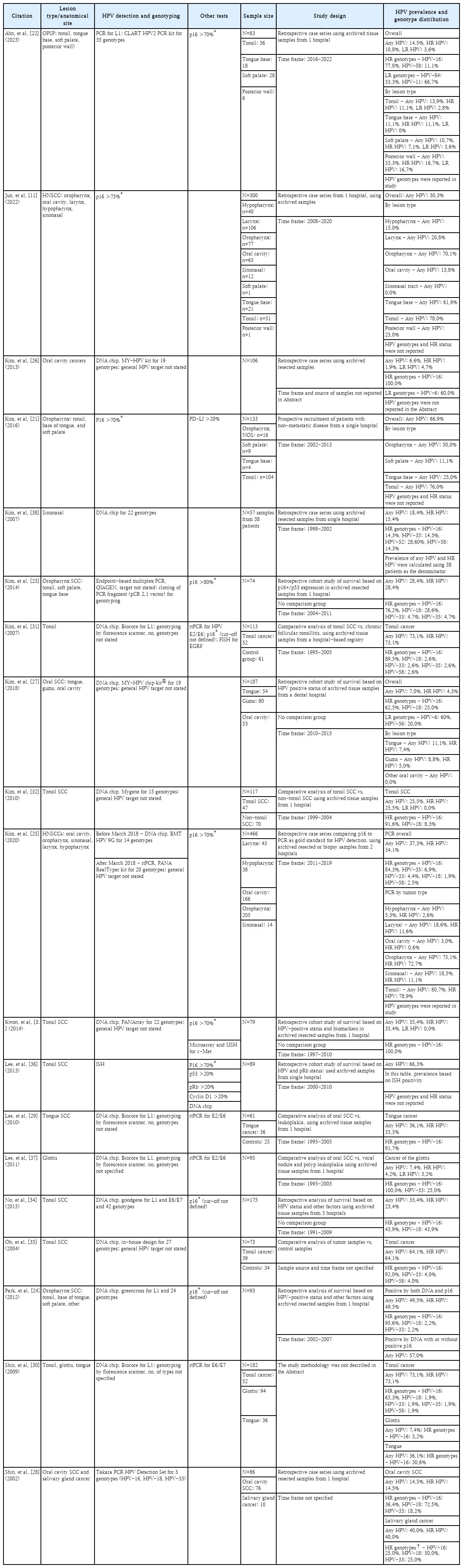
Characteristics of the included studies
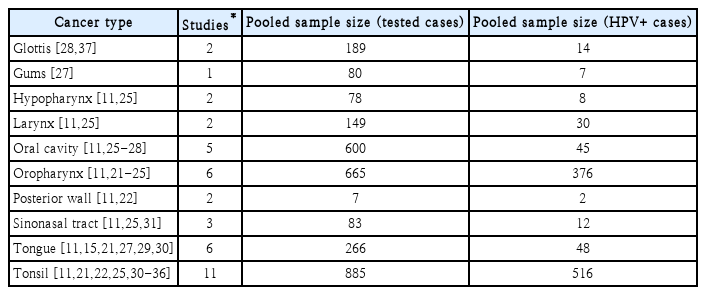
Number of included studies reporting on subtypes of head and neck cancer
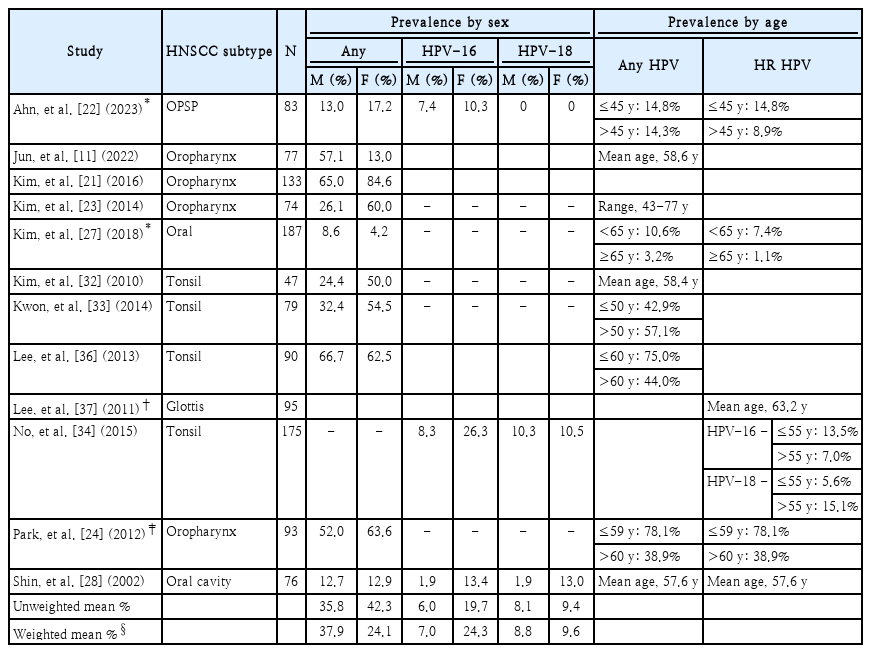
Prevalence of HPV in subtypes of head and neck cancer, by sex and age

Study methodology varied across the included studies (Table 2 and Supplementary Table 3). Six studies were case series [11,22,25,26,28,38], including 1 comparing immunohistochemistry for p16 with a gold standard of polymerase chain reaction (PCR) for the detection of HPV in tumor samples [25]. Six studies were retrospective cohorts designed to evaluate overall or progression-free survival based on clinical and tumor factors, including HPV status [23,24,27,33,34,36]. One study evaluated survival using data prospectively collected from patients with cancer of the oropharynx [21]. Other studies were cross-sectional analyses evaluating HPV prevalence in HNSCCs compared with benign conditions affecting the same organ; these included studies evaluating cancer of the glottis [37], tongue [29], and tonsil [31,35]. Another comparative analysis evaluated HPV prevalence in cancer of the tonsil versus non-tonsillar cancer of the upper aerodigestive tract [32].

Most of the included studies assessed data primarily collected before 2011 [21,23,24,26,28-38], but some assessed data primarily collected from 2011 onwards [11,25,27], including 1 study reporting on patients diagnosed with cancer of the oropharynx from 2016 through 2022 [22]. In total, 13 of the included studies had sample sizes of less than 120 and were conducted in a single hospital [23,24,26,28-34,36-38]. One study based in a dental hospital had a sample size of 187 [27], while 2 other studies conducted across multiple hospitals had sample sizes ranging from 175 to 466 [25,34]. One study did not specify where it was conducted [35].

Among the included studies, HPV genotyping was primarily conducted by DNA chip using commercially available kits (Supplementary Table 3) [24-27,32-34,38]. Other studies conducted HPV genotyping using PCR [22,25,28], cloning [23], and fluorescence scanning [29-31,37]. One study, published in 2004, assessed HPV genotypes using an in-house microarray for HPV DNA [35]. Several studies used p16 detected by immunohistochemistry with a predefined cut-off to test for HPV or HR HPV [11,21-25,31,33,34,36]. However, except for Park, et al. (2012) [24], Jun, et al. (2022) [11], and Lee, et al. (2013) [36], studies did not require p16 expression to define the detection of any HPV or HR HPV.

Prevalence of HPV in patients with head and neck cancer

Multiple studies reporting a range of prevalence values contributed to the calculation of weighted mean prevalence estimates of any HPV and HR HPV for cancers of the glottis [30,37], oropharynx [11,21-25], oral cavity [11,25-28], tongue [11,15,21,27,29,30], and tonsil [11,21,22,25,30-36]. Prevalences of any HPV genotypes and HR HPV for cancer of the gums were based on a single study [27]. HNSCC subtypes with the highest prevalence of any HPV were cancers of the oropharynx (weighted mean, 56.5%; range, 14.5%-75.1%), tonsil (weighted mean, 51.6%; range, 13.9%-80.7%), and posterior wall (28.6%; range, 0.0%-33.3%) (Fig. 2). HNSCC subtypes with the highest mean prevalence of HR HPV were cancers of the tonsil (weighted mean, 48.8%; range, 11.1%-78.9%) and oropharynx (weighted mean, 49.5%; range, 10.8%-72.7%).
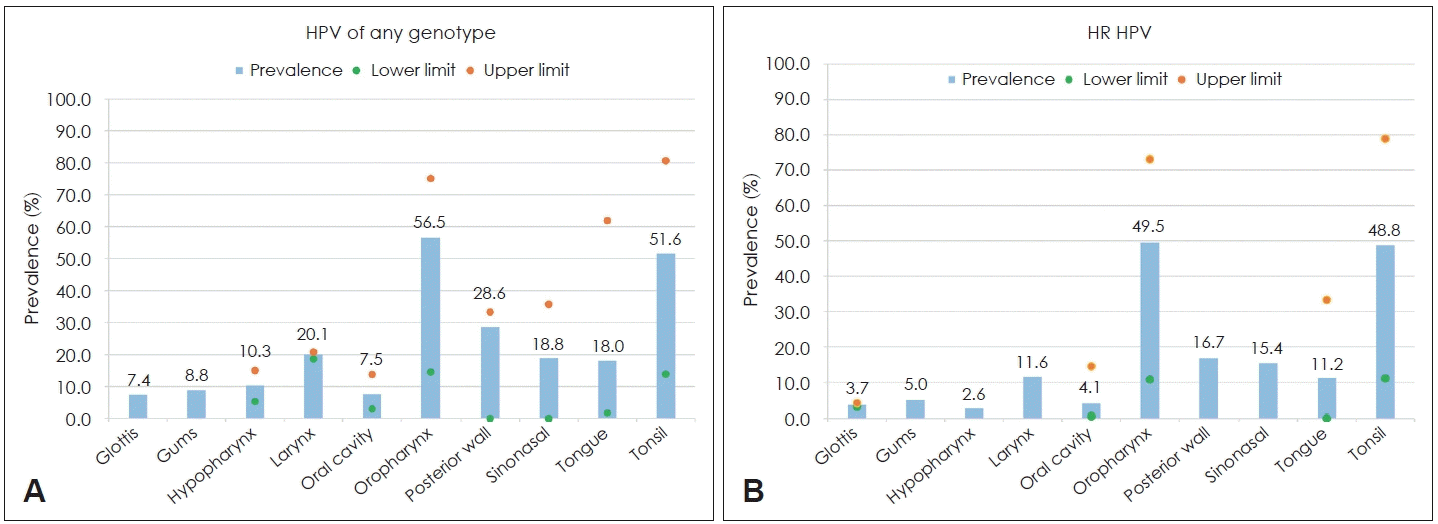
Fig. 2.

Prevalence of HPV of any genotype and HR genotypes in subtypes of head and neck cancer in the pooled sample of included studies. Bars represent the weighted mean prevalences; weights were determined by the study sample size. Dots represent the lower and upper limits of the range of prevalences. Bars without dots represent estimates derived from a single study. Two studies of cancer of the glottis both reported prevalences of any HPV of 7.4%; thus, a range is not shown. Prevalences cannot be compared across (A) and (B), as not all studies reported on HR HPV. HPV, human papillomavirus; HR, high-risk.

Across subtypes of HNSCC, prevalences of any HPV varied for male cases (range, 8.6%-66.7%) and female cases (range, 4.2%-84.6%) (Table 4). Across both sexes, the lowest prevalences of any HPV were reported for oral cancer [27] and the highest prevalences, for cancer of the oropharynx cancer [21,24,36]. The weighted mean prevalence of any HPV in HNSCCs was higher in male cases (37.9%) than in female cases (24.1%). The mean weighted prevalence of HPV-16 was lower in male cases (7.0%) than in female cases (24.3%), whereas the weighted mean prevalence of HPV-18 was similar across sexes (male: 8.8%; female: 9.6%). Studies varied regarding their definitions of age groups, as well as findings regarding the prevalence of HPV by age.

Genotype distribution of HPV detected in head and neck cancer

The distribution of detected HPV genotypes varied widely by study and HNSCC subtype (Fig. 3). HPV-16 was the most common genotype detected. The weighted mean proportion of HPV-positive samples in which HPV-16 was detected was 75.6% for cancer of the oropharynx, 74.1% for cancer of the tonsil, 50.0% for cancer of the hypopharynx, 50.0% for cancer of the glottis, 40.0% for sinonasal cancer, 37.5% for cancer of the larynx, 29.5% for tongue cancer, and 26.8% for oral cavity cancer. HPV-18, the second-most common genotype detected, accounted for an average of 11.8% of HPV-positive oral cavity cancers, 9.0% of HPV-positive cancers of the oropharynx, and 8.6% of HPV-positive cancers of the tonsil. The weighted mean proportion of HPV infections involving HPV-33 was 2.3% for cancer of the oropharynx, 2.0% for cancer of the tonsil, and 1.9% for oral cavity cancer. HPV-35 was detected in an average of 7.2% of HPV-positive cancers of the glottis, 2.7% of HPV-positive cancers of the tonsil, and 2.6% of HPV-positive cancers of the oropharynx. HPV-52 was detected in an average of 16.7% of HPV-positive sinonasal cancers. HPV-58 was detected in an average of 1.9% of HPV-positive cancers of the oropharynx and 1.3% of HPV-positive cancers of the tonsil. HPV-69 was detected in an average of 20.0% of HPV-positive sinonasal cancers and 0.6% of HPV-positive cancers of the tonsil.
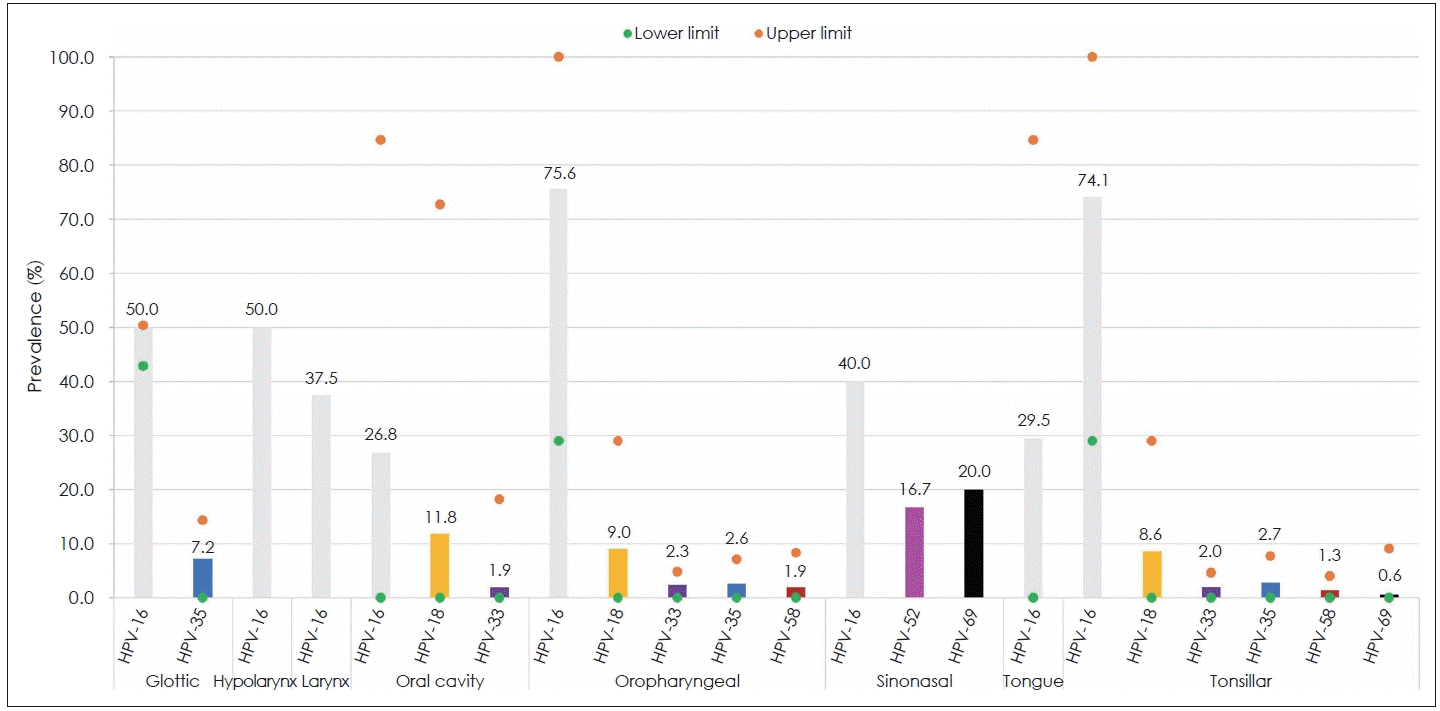
Fig. 3.

Distribution of HPV genotypes in subtypes of head and neck cancer, estimated from the pooled sample of included studies. Bars represent the weighted mean of the proportion HPV-positive cases in which the genotype was detected; weights were determined by the study sample size. Dots represent the lower and upper limits of the range of proportion detected. Bars without dots represent estimates derived from a single study. Proportions were estimated for each detected HPV genotype, regardless of whether it was part of a co-infection. HPV, human papillomavirus.

Discussion

The current review evaluated studies reporting on the prevalence and genotype distribution of HPV among South Korean patients diagnosed with HNSCC, finding that HPV was detected in a substantial number of cancers, including 56.5% of cancers of the oropharynx, 20.1% of cancers of the larynx, and 7.5% of oral cavity cancers. This finding fills a significant knowledge gap, as data on South Korea have been underrepresented in previous reviews of HPV-positivity in HNSCCs. While several reviews have estimated HPV prevalence across HNSCC subtypes using data from 30 to 273 studies globally and 4 to over 60 studies for East Asia [7,39-42], these estimates often include a diverse and inconsistently defined mix of Asian countries. Moreover, only 1 to 4 studies specifically focused on South Korean patients have been included in these reviews, highlighting the need for more region-specific data to better understand the burden of HPV-related HNSCC in South Korea [5,7,39-42].

Despite the limitations of previous reviews, we noted that our findings on the prevalence of HPV in HNSCC broadly accord with similar, albeit widely varying, estimates previously reported for Asia, which ranged from 20.4% to 51.7% for cancer of the oropharynx, 1.0% to 42.8% for oral cavity cancer, and 1.4% to 49.1% for cancer of the larynx [7,8,39-42]. Data from the current review indicate that in South Korea HR HPV accounts for 70% to over 90% of HPV genotypes detected in cancers of the oropharynx, tongue, tonsil, and oral cavity. The HR HPV-16 genotype was particularly common among cases in our data, representing about three-quarters of all genotypes detected in cancers of the oropharynx and tonsil and over one-quarter of genotypes detected in cancers of the larynx and oral cavity. Other reviews of HNSCC globally and in Asia have similarly reported that HPV-16 was overwhelmingly the most common genotype detected in HNSCC, particularly in cancer of the oropharynx, where it represented 75.9% to 97.8% of detected genotypes [7,40,42]. Although some co-infections were reported in the 19 studies included in this review, all involved HPV-16 or other HR genotypes, a finding consistent with reports of co-infection in previous reviews of HPV-associated HNSCC [39,42]. Together, these findings align with the understanding that oral infection with HR HPV genotypes is an important cause of HNSCCs in South Korea and globally.

We observed that the weighted mean average prevalence of any HPV was higher in male than female cases of HNSCC in South Korea. Previous studies have reported that compared with females, males have a 2- to 3-fold higher prevalence of HPV-16 in cancer of the oropharynx [43] and account for 2 to 5 times as many cases of HPV-associated HNSCCs [5]. The male preponderance of HPV in HNSCCs may, in part, be explained by biological factors, including the greater transmissibility of oral HPV to males compared to females during oral sex [44] and cross-protective antibody responses from HPV cervical infections in females [45,46]. HPV vaccination of males may help reduce the burden of HNSCCs in South Korea. The nonavalent vaccine, available in South Korea, targets HPV genotypes, 6, 11, 16, 18, 31, 33, 45, 52, and 58. Notably, HPV-33 and HPV-58 were detected in a substantial number of HNSCC cases in the studies we reviewed.

Extensive between-study variability in the prevalence of any HPV and HR HPV in HNSCC tumors was observed in this review, a finding consistent with those of other reviews of HNSCC that have reported extensive heterogeneity in HPV prevalence within a single region or country [39,40,42]. Extensive variability is also apparent in cross-regional comparisons of HPV prevalence, with some reviews reporting a higher prevalence of any HPV in cancer of the oropharynx in Asia than other world regions (46.3% vs. 35.6% [40]), some a similar prevalence (20.4% vs. 24.9% [7]), and some a lower prevalence (36.4% vs. 48.5% [41]). In some countries, including the United States, Australia, Canada, Japan, and Singapore, the incidence of HPV-positive cancer of the oropharynx has remained steady or increased in recent decades, while that of HPV-negative cancers of the oropharynx has decreased, possibly due to declines in tobacco and alcohol use [47-49]. In contrast, several countries in Europe have reported concomitant increases in both HPV-positive and HPV-negative cancers of the oropharynx [49]. Notably, varying incidence trends in HPV-positive HNSCC may reflect both geographic and temporal variations in sexual risk factors for oral HPV [37,50-53], as well as changes in oral HPV prevalence in the general population [54]. Given the variable temporal trends in HPV-positive HNSCC, cross-study differences in HPV prevalence in the current review may in part be due to differences in the years of case selection, which ranged from 1991 to 2022.

As reported in other reviews [39-42], a range of HPV detection and genotyping methodologies were used in studies evaluating HNSCC in South Korea, which may have further contributed to cross-study variation in prevalence estimates. Although most of the included studies used PCR for HPV detection, the sensitivity and specificity of PCR-based assays can vary widely [55]. Among studies in the current review, PCR techniques, though not always fully described, varied with regard to being endpoint-based versus a quantitative assay, the sequence target (L1 vs. L1/E6/E7), and the use of a commercial DNA chip versus other approaches. Notably, PCR may detect transient HPV infections unrelated to the malignancy, potentially leading to an overestimation of the burden of HPV-related tumors [46]. To address this issue, studies of HPV positivity in HNSCC tumors may evaluate other cellular markers to validate HPV-related oncogenesis [46]. Notably, p16 overexpression, an indicator of post-translation dysregulation detectable by immunohistochemistry, is recommended as a surrogate indicator of HR HPV and for use in tumor staging for oropharyngeal squamous cell carcinoma [46,55]. Another cellular marker, viral E6/E7 mRNA expression, indicates transcription of key HPV oncoproteins, correlates highly with p16 immunohistochemistry findings and is considered the gold standard of HPV-positivity in oropharyngeal tumors [49,55]. In the current review, most studies evaluating cancers of the oropharynx reported immunohistochemistry results for p16, most frequently [15,21,22,24,31,33,34,36], but not always [11,23] using a threshold of greater than 70%. Several studies also evaluated oncogenesis markers, including E6/E7 viral mRNA, E2/E6 viral mRNA, PD-L1, EGRF, pRB, and c-MET [21,29-31,33,37].

The current review had some limitations, which should be considered when evaluating its findings. Definitions of the anatomical sites varied across the included studies and were not always clearly described. As this was a systematic literature review, our findings depend on how the included reference studies reported their data. For example, if the studies did not separate oropharyngeal cancer subtypes, we could not disaggregate and identify the specific components (e.g., tonsil, soft palate, tongue) they collected. In addition, some of the studies were not conducted by head and neck specialists, which may have led to inaccuracies in classifying the anatomical sites. Furthermore, in some studies, cancer of the tonsil was reported as a separate category, potentially leading to a double counting of cases, as the tonsils are part of the oropharynx. Double-counting may also have occurred in studies reporting separately for tongue cancer, which is a subtype of oral cavity cancer and oropharyngeal cancer. Case selection was not well described in several studies, and thus the generalizability of their findings is unclear. Some studies assessed only a few genotypes of HPV, which may have led to an underestimation of HPV prevalence. The number of HPV genotypes tested varied across included studies, ranging from 3 to 42, potentially affecting findings regarding the distribution of HPV genotypes in HNSCC tumors. Additionally, the assays used for HPV genotyping in different studies varied in the number of HPV genotypes detected, which may have contributed to inconsistencies in genotype detection across studies. Finally, 3 studies lacked data on genotype or HR HPV status and thus were excluded from HR HPV prevalence estimates, potentially affecting the accuracy of these estimates [11,21,36].

In conclusion, we found that HR HPV, particularly HPV-16, was commonly detected in both male and female patients with subtypes of HNSCC in South Korea, particularly in cancer of the oropharynx. Safe and effective HPV vaccines are currently in use among girls only in South Korea [14,15,56]. To decrease the future burden of HPV-associated HNSCCs in South Korea, consideration should be given to extending the use of HPV vaccines to males and boys.

Supplementary Materials

The Supplement is available with this article at https://doi.org/10.3342/kjorl-hns.2025.00276.

Supplementary Table 1.

Search terms used to identify potentially eligible studies in the PubMed and Embase databases

Supplementary Table 2.

Anatomic site classifications

Supplementary Table 3.

HPV detection and genotyping information in included studies

Notes

Acknowledgments

The authors thank Ingrid Peterson in collaboration with ScribCo for medical writing assistance.

This study was funded by Merck Sharp & Dohme LLC, a subsidiary of Merck & Co., Inc., Rahway, NJ, USA.

AFSM was an intern of Merck Sharp & Dohme LLC, a subsidiary of Merck & Co., Inc., Rahway, NJ, USA at the time of the study.

RW and WW are employees of Merck Sharp & Dohme LLC, a subsidiary of Merck & Co., Inc., Rahway, NJ, USA and may have stock options in Merck & Co., Inc., Rahway, NJ, USA.

SO and GSY are employees of MSD Korea and may have stock options in Merck & Co., Inc., Rahway, NJ, USA.

YHW is an employee of MSD Taiwan.

IS is an employee of MSD Thailand and may have stock options in Merck & Co., Inc., Rahway, NJ, USA.

SYL has no conflicts of intertest to report.

Author Contribution

Conceptualization: Aneesha Fathima Syed Mohamed, Ying Hui Wu, Wei (Vivian) Wang. Data curation: Aneesha Fathima Syed Mohamed, Wei (Vivian) Wang. Formal analysis: Aneesha Fathima Syed Mohamed, Seyoung Oh, Ying Hui Wu, Ying Hui Wu, Isaya Sukarom, Sei Young Lee, Wei (Vivian) Wang. Funding acquisition: Wei (Vivian) Wang. Investigation: Seyoung Oh, Ying Hui Wu, Ying Hui Wu, Isaya Sukarom, Sei Young Lee, Wei (Vivian) Wang. Methodology: Aneesha Fathima Syed Mohamed, Seyoung Oh, Ying Hui Wu, Ying Hui Wu, Isaya Sukarom, Sei Young Lee, Wei (Vivian) Wang. Project administration: Aneesha Fathima Syed Mohamed, Ruixuan Wang. Resources: Aneesha Fathima Syed Mohamed, Ruixuan Wang, Wei (Vivian) Wang. Software: Aneesha Fathima Syed Mohamed. Supervision: Aneesha Fathima Syed Mohamed, Ruixuan Wang, Ying Hui Wu, Wei (Vivian) Wang. Validation: Aneesha Fathima Syed Mohamed. Visualization: Aneesha Fathima Syed Mohamed. Writing—original draft: all authors. Writing—review & editing: all authors.

References

1. Bray F, Laversanne M, Sung H, Ferlay J, Siegel RL, Soerjomataram I, et al. Global cancer statistics 2022: GLOBOCAN estimates of incidence and mortality worldwide for 36 cancers in 185 countries. CA Cancer J Clin 2024;74(3):229–63.
2. Gormley M, Creaney G, Schache A, Ingarfield K, Conway DI. Reviewing the epidemiology of head and neck cancer: definitions, trends and risk factors. Br Dent J 2022;233(9):780–6.
3. Novotech. Head and neck cancer landscape in Asia-Pacific [online] 2021 [cited October 1, 2024]. Available from: URL: https://novotech-cro.com/sites/default/files/2021-02/H%26N%20Cancer%20Landscape%20in%20Asia-Pacific_2021.pdf.
4. Stjernstrøm KD, Jensen JS, Jakobsen KK, Grønhøj C, von Buchwald C. Current status of human papillomavirus positivity in oropharyngeal squamous cell carcinoma in Europe: a systematic review. Acta Otolaryngol 2019;139(12):1112–6.
5. de Martel C, Plummer M, Vignat J, Franceschi S. Worldwide burden of cancer attributable to HPV by site, country and HPV type. Int J Cancer 2017;141(4):664–70.
6. Mehanna H, Beech T, Nicholson T, El-Hariry I, McConkey C, Paleri V, et al. Prevalence of human papillomavirus in oropharyngeal and nonoropharyngeal head and neck cancer--systematic review and meta-analysis of trends by time and region. Head Neck 2013;35(5):747–55.
7. Castellsagué X, Alemany L, Quer M, Halec G, Quirós B, Tous S, et al. HPV involvement in head and neck cancers: comprehensive assessment of biomarkers in 3680 patients. J Natl Cancer Inst 2016;108(6):djv403.
8. Nibu KI, Oridate N, Saito Y, Roset M, Forés Maresma M, Cuadras D, et al. Human papillomavirus-driven head and neck cancers in Japan during 2008-2009 and 2018-2019: the BROADEN study. Cancer Sci 2024;115(8):2808–18.
9. Lechner M, Liu J, Masterson L, Fenton TR. HPV-associated oropharyngeal cancer: epidemiology, molecular biology and clinical management. Nat Rev Clin Oncol 2022;19(5):306–27.
10. Shin A, Jung YS, Jung KW, Kim K, Ryu J, Won YJ. Trends of human papillomavirus-related head and neck cancers in Korea: national cancer registry data. Laryngoscope 2013;123(11):E30–7.
11. Jun HW, Ji YB, Song CM, Myung JK, Park HJ, Tae K. Positive rate of human papillomavirus and its trend in head and neck cancer in South Korea. Front Surg 2022;8:833048.
12. Abramowitz L, Lacau Saint Guily J, Moyal-Barracco M, Bergeron C, Borne H, Dahlab A, et al. Epidemiological and economic burden of potentially HPV-related cancers in France. PLoS One 2018;13(9)e0202564.
13. Faraji F, Rettig EM, Tsai HL, El Asmar M, Fung N, Eisele DW, et al. The prevalence of human papillomavirus in oropharyngeal cancer is increasing regardless of sex or race, and the influence of sex and race on survival is modified by human papillomavirus tumor status. Cancer 2019;125(5):761–9.
14. Choi I, Lee D, Son KB, Bae S. Incidence, cost and gender differences of oropharyngeal and noncervical anogenital cancers in South Korea. BMC Public Health 2020;20(1):1035.
15. Kim YT, Serrano B, Lee JK, Lee H, Lee SW, Freeman C, et al. Burden of human papillomavirus (HPV)-related disease and potential impact of HPV vaccines in the Republic of Korea. Papillomavirus Res 2019;7:26–42.
16. Dykens JA, Peterson CE, Holt HK, Harper DM. Gender neutral HPV vaccination programs: reconsidering policies to expand cancer prevention globally. Front Public Health 2023;11:1067299.
17. Zou K, Huang Y, Li Z. Prevention and treatment of human papillomavirus in men benefits both men and women. Front Cell Infect Microbiol 2022;12:1077651.
18. World Health Organization. Immunization, vaccines and biologicals [online] [cited 2024 Oct 1]. Available from: URL: https://www.who.int/teams/immunization-vaccines-and-biologicals/diseases/human-papillomavirus-vaccines-(HPV)/hpv-clearing-house/hpvdashboard.
19. Page MJ, McKenzie JE, Bossuyt PM, Boutron I, Hoffmann TC, Mulrow CD, et al. The PRISMA 2020 statement: an updated guideline for reporting systematic reviews. Syst Rev 2021;10(1):89.
20. National Cancer Institute. HPV and cancer [online] [cited 2024 Nov 15]. Available from: URL: https://www.cancer.gov/aboutcancer/causes-prevention/risk/infectious-agents/hpv-and-cancer.
21. Kim HS, Lee JY, Lim SH, Park K, Sun JM, Ko YH, et al. Association between PD-L1 and HPV status and the prognostic value of PD-L1 in oropharyngeal squamous cell carcinoma. Cancer Res Treat 2016;48(2):527–36.
22. Ahn D, Kwak JH, Lee GJ, Sohn JH. Prevalence and characteristics of human papillomavirus infection in oropharyngeal squamous cell papilloma. Cancers (Basel) 2023;15(3):810.
23. Kim MJ, Ki MS, Kim K, Shim HJ, Hwang JE, Bae WK, et al. Different protein expression associated with chemotherapy response in oropharyngeal cancer according to HPV status. BMC Cancer 2014;14:824.
24. Park WS, Ryu J, Cho KH, Choi MK, Moon SH, Yun T, et al. Human papillomavirus in oropharyngeal squamous cell carcinomas in Korea: use of G1 cycle markers as new prognosticators. Head Neck 2012;34(10):1408–17.
25. Kim Y, Joo YH, Kim MS, Lee YS. Prevalence of high-risk human papillomavirus and its genotype distribution in head and neck squamous cell carcinomas. J Pathol Transl Med 2020;54(5):411–8.
26. Kim HS, Seo MH, Kim SM, Cho YA, Lee SK, Lee JH, et al. [Prevalence of human papillomavirus infection in the Korean oral cancer patients]. J Korean Assoc Maxillofac Plast Reconstr Surg 2013;35(4):227–35. Korean.
27. Kim SM, Kwon IJ, Myoung H, Lee JH, Lee SK. Identification of human papillomavirus (HPV) subtype in oral cancer patients through microarray technology. Eur Arch Otorhinolaryngol 2018;275(2):535–43.
28. Shin KH, Park KH, Hong HJ, Kim JM, Oh JE, Choung PH, et al. Prevalence of microsatellite instability, inactivation of mismatch repair genes, p53 mutation, and human papillomavirus infection in Korean oral cancer patients. Int J Oncol 2002;21(2):297–302.
29. Lee SY, Cho NH, Choi EC, Baek SJ, Kim WS, Shin DH, et al. Relevance of human papilloma virus (HPV) infection to carcinogenesis of oral tongue cancer. Int J Oral Maxillofac Surg 2010;39(7):678–83.
30. Shin DH, Lee SY, Koo BS, Kim SH. [The etiologic roles and carcinogenic mechanisms of human papilloma virus in head and neck squamous cell carcinoma]. Korean J Head Neck Oncol 2009;25(1):28–32. Korean.
31. Kim SH, Koo BS, Kang S, Park K, Kim H, Lee KR, et al. HPV integration begins in the tonsillar crypt and leads to the alteration of p16, EGFR and c-myc during tumor formation. Int J Cancer 2007;120(7):1418–25.
32. Kim Y, Jeong EH, Min BW, Kim SS, Choi YD, Jung WJ, et al. HPV genotyping in squamous cell carcinoma of upper aerodigestive tract. J Pathol Transl Med 2010;44(5):483–7.
33. Kwon MJ, Kim DH, Park HR, Shin HS, Kwon JH, Lee DJ, et al. Frequent hepatocyte growth factor overexpression and low frequency of c-Met gene amplification in human papillomavirus-negative tonsillar squamous cell carcinoma and their prognostic significances. Hum Pathol 2014;45(7):1327–38.
34. No JH, Sung MW, Hah JH, Choi SH, Lee MC, Kim HS, et al. Prevalence and prognostic value of human papillomavirus genotypes in tonsillar squamous cell carcinoma: a Korean multicenter study. Cancer 2015;121(4):535–44.
35. Oh TJ, Kim CJ, Woo SK, Kim TS, Jeong DJ, Kim MS, et al. Development and clinical evaluation of a highly sensitive DNA microarray for detection and genotyping of human papillomaviruses. J Clin Microbiol 2004;42(7):3272–80.
36. Lee M, Kim SB, Lee SW, Roh JL, Choi SH, Nam SY, et al. Human papillomavirus prevalence and cell cycle related protein expression in tonsillar squamous cell carcinomas of Korean patients with clinicopathologic analysis. Korean J Pathol 2013;47(2):148–57.
37. Lee SY, Cho NH, Choi EC, Kim WS, Kim SH. Is human papillomavirus a causative factor of glottic cancer? J Voice 2011;25(6):770–4.
38. Kim JY, Yoon JK, Citardi MJ, Batra PS, Roh HJ. The prevalence of human papilloma virus infection in sinonasal inverted papilloma specimens classified by histological grade. Am J Rhinol 2007;21(6):664–9.
39. Katirachi SK, Grønlund MP, Jakobsen KK, Grønhøj C, von Buchwald C. The prevalence of HPV in oral cavity squamous cell carcinoma. Viruses 2023;15(2):451.
40. Kreimer AR, Clifford GM, Boyle P, Franceschi S. Human papillomavirus types in head and neck squamous cell carcinomas worldwide: a systematic review. Cancer Epidemiol Biomarkers Prev 2005;14(2):467–75.
41. Liu H, Li J, Diao M, Cai Z, Yang J, Zeng Y. Statistical analysis of human papillomavirus in a subset of upper aerodigestive tract tumors. J Med Virol 2013;85(10):1775–85.
42. Shaikh MH, McMillan NA, Johnson NW. HPV-associated head and neck cancers in the Asia Pacific: a critical literature review & meta-analysis. Cancer Epidemiol 2015;39(6):923–38.
43. Lacau St Guily J, Rousseau A, Baujat B, Périé S, Schultz P, Barry B, et al. Oropharyngeal cancer prognosis by tumour HPV status in France: the multicentric Papillophar study. Oral Oncol 2017;67:29–36.
44. Berman TA, Schiller JT. Human papillomavirus in cervical cancer and oropharyngeal cancer: one cause, two diseases. Cancer 2017;123(12):2219–29.
45. Lieblong BJ, Montgomery BEE, Su LJ, Nakagawa M. Natural history of human papillomavirus and vaccinations in men: a literature review. Health Sci Rep 2019;2(5):e118.
46. Sabatini ME, Chiocca S. Human papillomavirus as a driver of head and neck cancers. Br J Cancer 2020;122(3):306–14.
47. Bosetti C, Carioli G, Santucci C, Bertuccio P, Gallus S, Garavello W, et al. Global trends in oral and pharyngeal cancer incidence and mortality. Int J Cancer 2020;147(4):1040–9.
48. Peres MA, Huihua L, Antunes JLF, Perea LME, Iyer NG, Peres KG. Time trend and age-period-cohort analysis of potentially HPV-related oral and pharyngeal cancer incidence in Singapore between 1968 and 2017. Oral Oncol 2023;136:106272.
49. Shewale JB, Gillison ML. Dynamic factors affecting HPV-attributable fraction for head and neck cancers. Curr Opin Virol 2019;39:33–40.
50. D’Souza G, Anantharaman D, Gheit T, Abedi-Ardekani B, Beachler DC, Conway DI, et al. Effect of HPV on head and neck cancer patient survival, by region and tumor site: a comparison of 1362 cases across three continents. Oral Oncol 2016;62:20–7.
51. Heck JE, Berthiller J, Vaccarella S, Winn DM, Smith EM, Shan’gina O, et al. Sexual behaviours and the risk of head and neck cancers: a pooled analysis in the International Head and Neck Cancer Epidemiology (INHANCE) consortium. Int J Epidemiol 2010;39(1):166–81.
52. Mena M, Taberna M, Monfil L, Arbyn M, de Sanjosé S, Bosch FX, et al. Might oral human papillomavirus (HPV) infection in healthy individuals explain differences in HPV-attributable fractions in oropharyngeal cancer? A systematic review and meta-analysis. J Infect Dis 2019;219(10):1574–85.
53. Roberts H, Clark A, Sherman C, Heitzeg MM, Hicks BM. Age, sex, and other demographic trends in sexual behavior in the United States: initial findings of the sexual behaviors, internet use, and psychological adjustment survey. PLoS One 2021;16(8)e0255371.
54. Alramadhan SA, Fitzpatrick SG, Bhattacharyya I, Islam MN, Cohen DM. Changing trends in benign human papillomavirus (HPV) related epithelial neoplasms of the oral cavity: 1995-2015. Head Neck Pathol 2022;16(3):738–45.
55. Williams J, Kostiuk M, Biron VL. Molecular detection methods in HPV-related cancers. Front Oncol 2022;12:864820.
56. Soliman M, Oredein O, Dass CR. Update on safety and efficacy of HPV vaccines: focus on Gardasil. Int J Mol Cell Med 2021;10(2):101–13.

Article information Continued

Fig. 1.

Flow diagram of study selection.

Fig. 2.

Prevalence of HPV of any genotype and HR genotypes in subtypes of head and neck cancer in the pooled sample of included studies. Bars represent the weighted mean prevalences; weights were determined by the study sample size. Dots represent the lower and upper limits of the range of prevalences. Bars without dots represent estimates derived from a single study. Two studies of cancer of the glottis both reported prevalences of any HPV of 7.4%; thus, a range is not shown. Prevalences cannot be compared across (A) and (B), as not all studies reported on HR HPV. HPV, human papillomavirus; HR, high-risk.

Fig. 3.

Distribution of HPV genotypes in subtypes of head and neck cancer, estimated from the pooled sample of included studies. Bars represent the weighted mean of the proportion HPV-positive cases in which the genotype was detected; weights were determined by the study sample size. Dots represent the lower and upper limits of the range of proportion detected. Bars without dots represent estimates derived from a single study. Proportions were estimated for each detected HPV genotype, regardless of whether it was part of a co-infection. HPV, human papillomavirus.

Table 1.

Study selection criteria

Study variable Inclusion criteria Exclusion criteria*
Population • Adolescents and adults, aged 13 years or older with histologically confirmed invasive HNSCCs (oral cavity, oropharynx, larynx [glottis], hypopharynx, tonsil, tongue, gum, posterior wall, and sinonasal tract) • Children aged less than 13 years
• HPV-infected individuals without a histologically confirmed diagnosis of HNSCC
• Immunocompromised populations (e.g., HIV-infected)
• High-risk populations (e.g., smokers, people who abuse alcohol)
• Special populations (e.g., prison inmates, immigrants, ethnic minority populations)
Outcome • Prevalence of HPV, including high- and low-risk HPV genotypes in histologically confirmed invasive HNSCCs • Anatomic site other than head or neck
• Histology other than SCC
• Carcinoma in situ
• Non-histologically confirmed lesions
• Risk factors for infection or diseases
• No HPV DNA data
• No HPV detection or genotyping results from a DNA-based assay
• Attitudes or behaviors
Time • March 1, 2002-January 31, 2023 • Studies published before March 2002
Study type • Original studies, systematic reviews, or meta-analyses • Editorials, conference proceedings, studies without an abstract, narrative reviews, clinical guidelines
Language • English or Korean • Languages other than English or Korean
*

studies with both included and excluded populations or outcomes were reviewed, and non-excluded data, if presented, were integrated into the review;

the full-text of relevant reviews and meta-analyses were perused for primary references.

HNSCC, head and neck squamous cell carcinoma; HPV, human papillomavirus; HIV, human immunodeficiency virus; SCC, squamous cell carcinoma; DNA, deoxyribonucleic acid.

Table 2.

Characteristics of the included studies

Citation Lesion type/anatomical site HPV detection and genotyping Other tests Sample size Study design HPV prevalence and genotype distribution
Ahn, et al. [22] (2023) OPSP: tonsil, tongue base, soft palate, posterior wall) PCR for L1; CLART HPV2 PCR kit for 35 genotypes p16 >70%* N=83 Retrospective case series using archived tissue samples from 1 hospital Overall
Tonsil: 36  Any HPV: 14.5%, HR HPV: 10.8%, LR HPV: 3.6%
Tongue base: 18 Time frame: 2016-2022  HR genotypes - HPV-16: 77.8%, HPV-58: 11.1%
Soft palate: 28  LR genotypes - HPV-84: 33.3%, HPV-11: 66.7%
Posterior wall: 6 By lesion type
 Tonsil - Any HPV: 13.9%, HR HPV: 11.1%, LR HPV: 2.8%
 Tongue base - Any HPV: 11.1%, HR HPV: 11.1%, LR HPV: 0%
 Soft palate - Any HPV: 10.7%, HR HPV: 7.1%, LR HPV: 3.6%
 Posterior wall - Any HPV: 33.3%, HR HPV: 16.7%, LR HPV: 16.7%
HPV genotypes were reported in study
Jun, et al. [11] (2022) HNSCC: oropharynx, oral cavity, larynx, hypopharynx, sinonasal p16 >75%* N=300 Retrospective case series from 1 hospital, using archived samples Overall: Any HPV: 30.3%
Hypopharynx: n=40 By lesion type
Larynx: n=106 Time frame: 2008-2020  Hypopharynx - Any HPV: 15.0%
Oropharynx: n=77  Larynx - Any HPV: 20.8%
Oral cavity: n=65  Oropharynx - Any HPV: 70.1%
Sinonasal: n=12  Oral cavity - Any HPV: 13.8%
Soft palate: n=1  Sinonasal tract - Any HPV: 0.0%
Tongue base: n=21  Tongue base - Any HPV: 61.9%
Tonsil: n=51  Tonsil - Any HPV: 78.0%
Posterior wall: n=1  Posterior wall - Any HPV: 25.0%
HPV genotypes and HR status were not reported
Kim, et al. [26] (2013) Oral cavity cancers DNA chip, MY-HPV kit for 19 genotypes; general HPV target not stated N=106 Retrospective case series using archived resected samples Any HPV: 6.6%, HR HPV: 1.9%, LR HPV: 4.7%
HR genotypes - HPV-16: 100.0%
Time frame and source of samples not reported in Abstract LR genotypes - HPV-6: 60.0%
HPV genotypes were not reported in the Abstract
Kim, et al. [21] (2016) Oropharynx: tonsil, base of tongue, and soft palate P16 >70%* PD-LI >20% N=133 Prospective recruitment of patients with non-metastatic disease from a single hospital Overall: Any HPV: 66.9%
Oropharynx, NOS: n=16 By lesion type
Soft palate: n=9 Time frame: 2002-2013  Oropharynx - Any HPV: 50.0%
Tongue base: n=4  Soft palate - Any HPV: 11.1%
Tonsil: n=104  Tongue base - Any HPV: 25.0%
 Tonsil - Any HPV: 76.0%
HPV genotypes and HR status were not reported
Kim, et al. [38] (2007) Sinonasal DNA chip for 22 genotypes N=57 samples from 38 patients Retrospective case series using archived resected samples from single hospital Any HPV: 18.4%, HR HPV: 15.4%
Time frame: 1998-2002 HR genotypes - HPV-16: 14.3%, HPV-35: 14.3%, HPV-52: 28.60%, HPV-58: 14.3%
Prevalence of any HPV and HR HPV were calculated using 38 patients as the denominator
Kim, et al. [23] (2014) Oropharynx SCC: tonsil, soft palate, tongue base Endpoint-based multiplex PCR, QIAGEN, target not stated; cloning of PCR fragment (pCR 2.1 vector) for genotyping p16 >80%* N=74 Retrospective cohort study of survival based on p16+/p53 expression in archived resected samples from 1 hospital Any HPV: 28.4%, HR HPV: 28.4%
No comparison group HR genotypes - HPV-16: 76.2%, HPV-18: 28.6%, HPV-33: 4.7%, HPV-35: 4.7%
Time frame: 2004-2011
Kim, et al. [31] (2007) Tonsil DNA chip, Biocore for L1; genotyping by florescence scanner, no. genotypes not stated rtPCR for HPV E2/E6; p16* (cut-off not defined); FISH for EGRF N=113 Comparative analysis of tonsil SCC vs. chronic follicular tonsillitis, using archived tissue samples from a hospital-based registry Tonsil cancer
Tonsil cancer: 52  Any HPV: 73.1%, HR HPV: 73.1%
Control group: 61 Time frame: 1995-2005  HR genotypes - HPV-16: 89.5%, HPV-18: 2.6%, HPV-33: 2.6%, HPV-35: 2.6%, HPV-58: 2.6%
Kim, et al. [27] (2018) Oral SCC: tongue, gums, oral cavity DNA chip, MY-HPV chip kit® for 19 genotypes; general HPV target not stated N=187 Retrospective cohort study of survival based on HPV positive status of archived tissue samples from a dental hospital Overall
Tongue: 54  Any HPV: 7.0%, HR HPV: 4.3%
Gums: 80  HR genotypes - HPV-16: 62.5%, HPV-18: 25.0%
Oral cavity: 53 No comparison group  LR genotypes - HPV-6: 60%, HPV-56: 20.0%
Time frame: 2010-2015 By lesion type
 Tongue - Any HPV: 11.1%, HR HPV: 7.4%
 Gums - Any HPV: 8.8%, HR HPV: 5.0%
 Other oral cavity - Any HPV: 0.0%
Kim, et al. [32] (2010) Tonsil SCC DNA chip, Mygene for 15 genotypes; general HPV target not stated N=117 Comparative analysis of tonsil SCC vs. non-tonsil SCC using archived tissue samples from 1 hospital Tonsil SCC
Tonsil SCC: 47  Any HPV: 25.5%, HR HPV: 25.5%, LR HPV: 0.0%
Non-tonsil SCC: 70 Time frame: 1999-2004  HR genotypes - HPV-16: 91.6%, HPV-18: 8.3%
Kim, et al. [25] (2020) HNSCCs: oral cavity, oropharynx, sinonasal, larynx, hypopharynx Before March 2018 - DNA chip, BMT HPV 9G for 14 genotypes p16 >70%* N=466 Retrospective case series comparing p16 to PCR as gold standard for HPV detection, using archived resected or biopsy samples from 2 hospitals PCR overall
Larynx: 43  Any HPV: 37.3%, HR HPV: 34.1%
After March 2018 - rtPCR, PANA RealTyper kit for 20 genotypes; general HPV target not stated Hypopharynx: 38 Time frame: 2011-2019  HR genotypes - HPV-16: 84.3%, HPV-35: 6.9%, HPV-33: 4.4%, HPV-18: 1.9%, HPV-58: 2.5%
Oral cavity: 166 PCR by tumor type
Oropharynx: 205  Hypopharynx - Any HPV: 5.3%, HR HPV: 2.6%
Sinonasal: 14  Larynx: - Any HPV: 18.6%, HR HPV: 11.6%
 Oral cavity - Any HPV: 3.0%, HR HPV: 0.6%
 Oropharynx - Any HPV: 75.1%, HR HPV: 72.7%
 Sinonasal: - Any HPV: 18.5%, HR HPV: 11.1%
 Tonsil: - Any HPV: 80.7%, HR HPV: 78.9%
HPV genotypes were reported in study
Kwon, et al. [33] (2014) Tonsil SCC DNA chip, PANArray for 22 genotypes; general HPV target not stated p16 >70%* N=79 Retrospective cohort study of survival based on HPV-positive status and biomarkers in archived resected samples from 1 hospital Any HPV: 35.4%, HR HPV: 35.4%, LR HPV: 0.0%
Microarray and SISH for c-Met No comparison group HR genotypes - HPV-16: 100.0%
Time frame: 1997-2010
Lee, et al. [36] (2013) Tonsil SCC ISH P16 >70%* N=89 Retrospective cohort study of survival based on HPV and pRb status; used archived samples from single hospital Any HPV: 66.3%
p53 >20% In this table, prevalence based on ISH positivity
pRb >20% Time frame: 2000-2010
Cyclin D1 >20% HPV genotypes and HR status were not reported
DNA chip
Lee, et al. [29] (2010) Tongue SCC DNA chip, Biocore for L1; genotyping by florescence scanner, no. genotypes not stated rtPCR for E2/E6 N=61 Comparative analysis of oral SCC vs. leukoplakia, using archived tissue samples from 1 hospital Tongue cancer
Tongue cancer: 36  Any HPV: 36.1%, HR HPV: 33.3%
Controls: 25 Time frame: 1995-2005  HR genotypes - HPV-16: 91.7%
Lee, et al. [37] (2011) Glottis DNA chip, Biocore for L1, genotyping by florescence scanner, no. genotypes not specified rtPCR for E2/E6 N=95 Comparative analysis of oral SCC vs. vocal nodule and polyp leukoplakia using archived tissue samples from 1 hospital Cancer of the glottis
 Any HPV: 7.4%, HR HPV: 4.2%, LR HPV: 3.2%
Time frame: 1995-2005  HR genotypes - HPV-16: 100.0%, HPV-33: 25.0%
No, et al. [34] (2015) Tonsil SCC DNA chip, goodgene for L1 and E6/E7 and 42 genotypes p16* (cut-off not defined) N=175 Retrospective analysis of survival based on HPV status and other factors using archived tissue samples from 3 hospitals Any HPV: 35.4%, HR HPV: 23.4%
No comparison group HR genotypes - HPV-16: 43.9%, HPV-18: 43.9%
Time frame: 1991-2009
Oh, et al. [35] (2004) Tonsil SCC DNA chip, in-house design for 27 genotypes; general HPV target not stated N=73 Comparative analysis of tumor samples vs. control samples Tonsil cancer
Tonsil cancer: 39  Any HPV: 64.1%, HR HPV: 64.1%
Controls: 34 Sample source and time frame not specified  HR genotypes - HPV-16: 92.0%, HPV-33: 4.0%, HPV-58: 4.0%
Park, et al. [24] (2012) Oropharynx SCC: tonsil, base of tongue, soft palate, other DNA chip, greencross for L1 and 24 genotypes p16* (cut-off not defined) N=93 Retrospective analysis of survival based on HPV-positive status and other factors using archived resected samples from 1 hospital Positive by both DNA and p16
 Any HPV: 49.5%, HR HPV: 49.5%
 HR genotypes - HPV-16: 95.6%, HPV-18: 2.2%, HPV-33: 2.2%
Time frame: 2002-2007 Positive by DNA with or without positive p16
 Any HPV: 57.0%
Shin, et al. [30] (2009) Tonsil, glottis, tongue DNA chip, Biocore for L1; genotyping by florescence scanner, no. of types not specified rtPCR for E6/E7 N=182 The study methodology was not described in the Abstract Tonsil cancer
Tonsil cancer: 52  Any HPV: 73.1%, HR HPV: 73.1%
Glottis: 94  HR genotypes - HPV-16: 65.3%, HPV-18: 1.9%, HPV-33: 1.9%, HPV-35: 1.9%, HPV-58: 1.9%
Tongue: 36 Glottis
 Any HPV: 7.4%; HR genotypes - HPV-16: 3.2%
Tongue
 Any HPV: 36.1%; HR genotypes - HPV-16: 30.6%
Shin, et al. [28] (2002) Oral cavity SCC and salivary gland cancer Takara PCR HPV Detection Set for 3 genotypes (HPV-16, HPV-18, HPV-33) N=86 Retrospective case series using archived resected samples from 1 hospital Oral cavity SCC
Oral cavity SCC: 76  Any HPV: 14.5%, HR HPV: 14.5%
Salivary gland cancer: 10 Time frame not specified  HR genotypes - HPV-16: 36.4%, HPV-18: 72.5%, HPV-33: 18.2%
Salivary gland cancer
 Any HPV: 40.0%, HR HPV: 40.0%
 HR genotypes - HPV-16: 25.0%, HPV-18: 50.0%, HPV-33: 25.0%

Prevalence refers to the proportion of tumors infected with HPV. Unless otherwise indicated, co-infected tumors were classified as HR HPV if a HR genotype was detected. Percentages of HPV-positive cases may not add to 100%, as not all genotypes are reported here and multiple genotypes were detected in some tumors.

*

detected by IHC;

tested only for HPV-16, HPV-18, and HPV-33.

HPV, human papillomavirus; OPSP, oropharyngeal squamous papilloma; PCR, polymerase chain reaction; HR, high-risk; LR, low-risk; HNSCC, head and neck squamous cell carcinoma; DNA, deoxyribonucleic acid; NOS, not otherwise specified; SCC, squamous cell carcinoma; rtPCR, reverse transcriptase polymerase chain reaction; SISH, silver in situ hybridization; ISH, in situ hybridization; IHC, immunohistochemistry.

Table 3.

Number of included studies reporting on subtypes of head and neck cancer

Cancer type Studies* Pooled sample size (tested cases) Pooled sample size (HPV+ cases)
Glottis [28,37] 2 189 14
Gums [27] 1 80 7
Hypopharynx [11,25] 2 78 8
Larynx [11,25] 2 149 30
Oral cavity [11,25-28] 5 600 45
Oropharynx [11,21-25] 6 665 376
Posterior wall [11,22] 2 7 2
Sinonasal tract [11,25,31] 3 83 12
Tongue [11,15,21,27,29,30] 6 266 48
Tonsil [11,21,22,25,30-36] 11 885 516

Anatomic sites are listed in Supplementary Table 2.

*

studies can be counted as reporting for more than 1 cancer type.

Table 4.

Prevalence of HPV in subtypes of head and neck cancer, by sex and age

Study HNSCC subtype N Prevalence by sex
Prevalence by age
Any
HPV-16
HPV-18
Any HPV HR HPV
M (%) F (%) M (%) F (%) M (%) F (%)
Ahn, et al. [22] (2023)* OPSP 83 13.0 17.2 7.4 10.3 0 0 ≤45 y: 14.8% ≤45 y: 14.8%
>45 y: 14.3% >45 y: 8.9%
Jun, et al. [11] (2022) Oropharynx 77 57.1 13.0 Mean age, 58.6 y
Kim, et al. [21] (2016) Oropharynx 133 65.0 84.6
Kim, et al. [23] (2014) Oropharynx 74 26.1 60.0 - - - - Range, 43-77 y
Kim, et al. [27] (2018)* Oral 187 8.6 4.2 - - - - <65 y: 10.6% <65 y: 7.4%
≥65 y: 3.2% ≥65 y: 1.1%
Kim, et al. [32] (2010) Tonsil 47 24.4 50.0 - - - - Mean age, 58.4 y
Kwon, et al. [33] (2014) Tonsil 79 32.4 54.5 - - - - ≤50 y: 42.9%
>50 y: 57.1%
Lee, et al. [36] (2013) Tonsil 90 66.7 62.5 ≤60 y: 75.0%
>60 y: 44.0%
Lee, et al. [37] (2011) Glottis 95 Mean age, 63.2 y
No, et al. [34] (2015) Tonsil 175 - - 8.3 26.3 10.3 10.5 HPV-16 - ≤55 y: 13.5%
>55 y: 7.0%
HPV-18 - ≤55 y: 5.6%
>55 y: 15.1%
Park, et al. [24] (2012) Oropharynx 93 52.0 63.6 - - - - ≤59 y: 78.1% ≤59 y: 78.1%
>60 y: 38.9% >60 y: 38.9%
Shin, et al. [28] (2002) Oral cavity 76 12.7 12.9 1.9 13.4 1.9 13.0 Mean age, 57.6 y Mean age, 57.6 y
Unweighted mean % 35.8 42.3 6.0 19.7 8.1 9.4
Weighted mean %§ 37.9 24.1 7.0 24.3 8.8 9.6

Table values represent percentages unless otherwise indicated.

*

the prevalence of HR HPV was 9.3% in male cases and 13.8% in female cases in Ahn, et al. [22] and 5.2% in male cases and 2.8% in female cases in Kim, et al. [27] In Ahn, et al., [22] the prevalence of HPV-58 was 8.3% in male cases and the prevalence of HPV-84 in female cases was 8.3%;

did not report on HPV prevalence by sex;

sex distribution data excluded 7 cases that were polymerase chain reaction-positive but p16-negative for HPV;

§

weighted by the samples sizes of studies reporting on HPV prevalence by sex.

HPV, human papillomavirus; HNSCC, head and neck squamous cell carcinoma; HR, high-risk; OPSP, oropharyngeal squamous papilloma.